A 2.0 ATA hyperbaric chamber (about 0.1 MPa gauge pressure) sits inside the medical-grade hyperbaric oxygen therapy range. It is moving beyond hospital rehab departments into sports recovery centers, longevity clinics, and high-end home setups, where it is used for wellness, athletic recovery, and post-surgical rehabilitation. As demand heats up, a dangerous mismatch is taking shape.
A 2.0 ATA chamber and a common 1.3–1.5 ATA soft-shell micro-pressure chamber are two completely different product classes: the former is engineered and certified to pressure-vessel standards, while the latter is a “micro-pressure experience pod” — and the cost gap between them is structural. Some manufacturers sell the idea of “2.0 ATA” at soft-shell costs. A substandard 2.0 ATA hyperbaric chamber is exactly the product of that mismatch, and the harm goes far beyond “poor results.”
1. Safety Hazards: The Pressure System of a Substandard 2.0 ATA Hyperbaric Chamber Can Fail at Any Time
1.1 Pressure That Never Reaches Its Rating — or Swings Wildly
In a substandard 2.0 ATA hyperbaric chamber, actual pressure often falls short of the rated value, or swings noticeably during compression and decompression. Cheap pressure sensors and valves can push cabin pressure abnormally high or low — the former means overpressure risk, the latter means a session that fails mid-treatment.
1.2 Aging Seals and Shrinking Pressure Retention
Seals age quickly under repeated compression and decompression, and tiny leaks multiply quietly. By the time a user notices the pressure “just won’t come up,” the equipment has usually been running sick for a long while.
1.3 Fire Risk: The Deadliest Threat in a High-Oxygen Environment
An oxygen-rich environment dramatically increases fire risk. If substandard electrical devices, fabrics, or other flammable materials are used inside the cabin, a single ignition source can have consequences beyond imagination. Flame-retardant design and ignition-source control are the safety floor of hyperbaric equipment — and precisely the parts substandard products are most likely to skip.
1.4 Ear, Nose, and Sinus Injuries — and Barotrauma
Poor control of compression and decompression rates easily causes ear pain, ear fullness, and sinus discomfort, and in severe cases barotrauma. For users who rely on regular sessions, this damage accumulates over time.
2. Underwhelming Results: “Fake 2.0 ATA” and Runaway Oxygen Levels
2.1 “Can Be Pressurized to 2.0 ATA” ≠ “Can Run Safely at 2.0 ATA Long-Term”
This is the industry’s most typical spec-inflation line: the pressure resistance, pressure retention, oxygen supply, and safety protection of a substandard 2.0 ATA hyperbaric chamber simply cannot support “long-term operation at 2.0 ATA.” Labeled 2.0 ATA, it can only limp along at a lower pressure — and results shrink accordingly.
2.2 Oxygen Concentration Running Too High or Too Low
A substandard oxygen supply system, sensors, and alarms can throw cabin oxygen concentration off balance: too low, and the therapy loses its point; out of control, and “oxygen therapy” becomes another risk. On many substandard devices, the alarm function is missing or simply dead.
3. Why a Genuine 2.0 ATA Chamber Has No Budget Version — The Cost Gap Is Structural
Because 2.0 ATA falls within the medical-grade hyperbaric oxygen therapy range, it is a real pressure test for the hull: sheet metal thickness, welding and forming processes, pressure-vessel regulatory hurdles, and component standards are all in a different league from 1.3–1.5 ATA soft-shell micro-pressure chambers. The resulting cost gap is structural.
This is not a “slightly more expensive” issue — it is a “two different species” issue. A soft-shell micro-pressure chamber only needs an inflatable structure; a 2.0 ATA hard chamber must be designed, manufactured, and inspected to pressure-vessel standards. For a substandard 2.0 ATA hyperbaric chamber, a low price is not a promotion — it is a cover for inflated specs. Selling a 2.0 ATA chamber at soft-shell prices leaves only two possibilities: either the specifications are inflated, or the product is non-compliant. A chamber that is both cheap and compliant simply does not exist on the market.
Warning: “Can be pressurized to 2.0 ATA” does not equal “can operate safely at 2.0 ATA over the long term.” When buying, verify pressure resistance, pressure retention, oxygen supply, and safety protection as four separate items.
4. Materials and Sealing: The Hull “Depreciates” With Every Pressure Cycle
Substandard hull materials, observation windows, zippers and sealing structures, and piping all age, deform, and leak under long-term pressure cycles. What is worse, without regular, standardized inspection these problems stay hidden until a failure occurs — and at 2.0 ATA, everyone knows what a “sudden failure” can mean.
Substandard compressors, oxygen generators, and exhaust systems also bring excessive noise, rising cabin temperature, and poor ventilation — a poor experience for anyone using the chamber regularly.
5. What a Qualified 2.0 ATA Hyperbaric Chamber Looks Like: A Benchmark in Process, Material, and Testing
Against a substandard 2.0 ATA hyperbaric chamber, a qualified product never compromises on three things: process, material, and testing.
5.1 Sheet Metal and Forming: The First Line of Defense Against Cracking
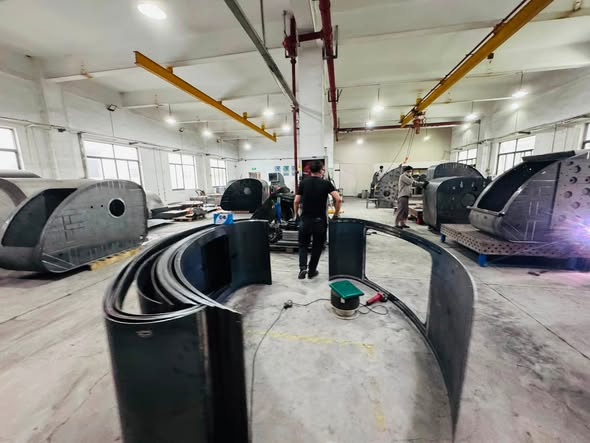
A 2.0 ATA hull endures repeated pressurization and decompression, and weak sheet metal or sloppy processes crack easily. The proper approach is full CNC precision cutting plus one-time hydraulic integral forming, with plate thickness tolerance held within ±0.1mm and a uniform overall radian — so the entire hull bears pressure evenly, avoiding local stress concentration and long-term deformation.
5.2 Materials Built to International Standards
A qualified chamber uses 304 stainless steel on the inside and 20mm-thick carbon steel plate on the outside. Sheet metal, welding, and every technical parameter are manufactured strictly to international standards — there is no “entry-level configuration.”
5.3 Eight Factory Tests — One Failure Means No Delivery
Before leaving the factory, the chamber completes eight categories of comprehensive testing under national standards such as GB/T 12130-2020 and TSG 24-2015, as well as special-equipment regulations: structural pressure resistance, airtightness, pressure control, the gas system, electrical safety, interlock protection, overall durability, appearance, and documentation. All pressure, alarm, and safety-interlock functions must be tested and certified 100%, with a complete factory inspection report and certificate of conformity issued before the equipment is delivered.
5.4 After-Sales: Warranty and Spare Parts Are Part of Safety
A responsible manufacturer offers a one-year warranty and at least three years of spare parts supply. Pressure equipment without after-sales support is safety without a safety net — and it is a promise no low-price substandard 2.0 ATA hyperbaric chamber can make. For reference, see how a 2.0 ATA hard-shell chamber is engineered and tested.
Bottom line: process (CNC precision cutting + integral hydraulic forming), material (304 stainless steel inside / 20mm carbon steel outside), and testing (eight categories, 100% tested) form the safety baseline of a 2.0 ATA chamber.
6. Substandard vs. Qualified 2.0 ATA Hyperbaric Chamber: One Table to See It All
Dimension
Substandard 2.0 ATA Hyperbaric Chamber
Qualified 2.0 ATA Hyperbaric Chamber
Pressure control
Inflated specs, large swings, cheap sensors and valves
Precise pressure control; pressure, alarms, and interlocks 100% tested
Sheet metal & forming
Poor plate, stitched welding, prone to cracking and deformation
One-year warranty plus at least three years of spare parts
Price logic
Low price, inflated specs
Medical-grade cost structure — no such thing as a “cheap compliant chamber”
7. Six Hard Rules for Buying and Avoiding Pitfalls
Ask for reports: require a factory inspection report and certificate of conformity completed to standards such as GB/T 12130-2020 and TSG 24-2015, and confirm that pressure, alarm, and safety-interlock functions were 100% tested.
Inspect the process: look at the hull material (304 stainless steel inside), the forming process (integral hydraulic forming beats stitched welding), and plate thickness tolerance. Under repeated pressurization, process quality is service life.
Distrust low prices: when a price is far below the market average, suspect inflated specs first and non-compliance second — don’t assume you’ve found a bargain.
Ask about safety configuration: pressure sensors, valves, oxygen-concentration alarms, interlock protection, and emergency relief — not one can be missing.
Get third-party inspection: for larger purchases, commission an independent body such as SGS or Bureau Veritas for a pre-shipment inspection, and release the balance only after it passes.
Confirm after-sales: a one-year warranty and at least three years of spare parts are the floor. Pressure equipment without after-sales support is running naked.
Finally, keep the chamber types straight: a 1.3–1.5 ATA soft-shell micro-pressure chamber is not a 2.0 ATA medical-grade hyperbaric chamber. Don’t pay for the words “hyperbaric oxygen” and receive a micro-pressure pod’s performance and risks. If you are comparing hyperbaric chambers for sale, use the six rules above as your screening checklist.
Conclusion
A 2.0 ATA hyperbaric chamber is essentially a combination of “pressure vessel + medical device.” Safety and results are built on material, process, and testing — there are no shortcuts. Whatever a low price saves on the purchase may be repaid in safety risk. Verify qualifications, reports, and processes before you buy, and stay away from any substandard 2.0 ATA hyperbaric chamber — that is the most basic responsibility to yourself and to your users.
FAQ
What is the difference between a 1.3–1.5 ATA soft-shell chamber and a 2.0 ATA hard-shell chamber?
A soft-shell chamber is a micro-pressure experience pod with a simple structure and low regulatory hurdles; a 2.0 ATA hard-shell chamber sits in the medical-grade therapy range and must be engineered and inspected to pressure-vessel standards. Their structures, costs, and testing regimes are simply not in the same league.
Why is there no budget version of a genuine 2.0 ATA chamber?
2.0 ATA demands far more from sheet metal, forming processes, pressure testing, and component standards than a micro-pressure chamber, plus multiple tests under special-equipment regulations. The cost gap is structural, so a substandard 2.0 ATA hyperbaric chamber sold cheap is most likely inflated in specs or non-compliant.
What should I verify first when buying a 2.0 ATA chamber?
The factory inspection report and certificate of conformity, and whether pressure, alarm, and safety-interlock functions were 100% tested. Also confirm the warranty period and spare-parts availability, and for larger purchases add a third-party pre-shipment inspection.
Adding a hyperbaric chamber to your wellness business may create a new service opportunity, but it also requires an investment in equipment, space, staff training and ongoing operations. Before making a purchase, you need to know whether the servi...
A batch of customized Timing hyperbaric oxygen chambers crossed the ocean and arrived safely at an overseas client’s private premises. Every unit was securely packed with reinforced wooden crates, shock-proof protective film, and heavy-duty bindin...
Buying a hyperbaric oxygen chamber involves more than comparing prices and pressure ratings. You also need to check the chamber's materials, safety features, oxygen supply, interior design, and after-sales support. For wellness centers, recovery f...
The M6 Double Cabin Hyperbaric Oxygen Chamber is a high-performance wellness device developed by Mindox, designed to deliver professional oxygen therapy for residential and commercial scenarios. Modern lifestyles bring persistent fatigue, sub-heal...
 MindOXYChamber