 MindOXYChamber


Submit your request to us, and we will contact you within 24 hours
What Is a Hyperbaric Oxygen Chamber? (Complete Guide)
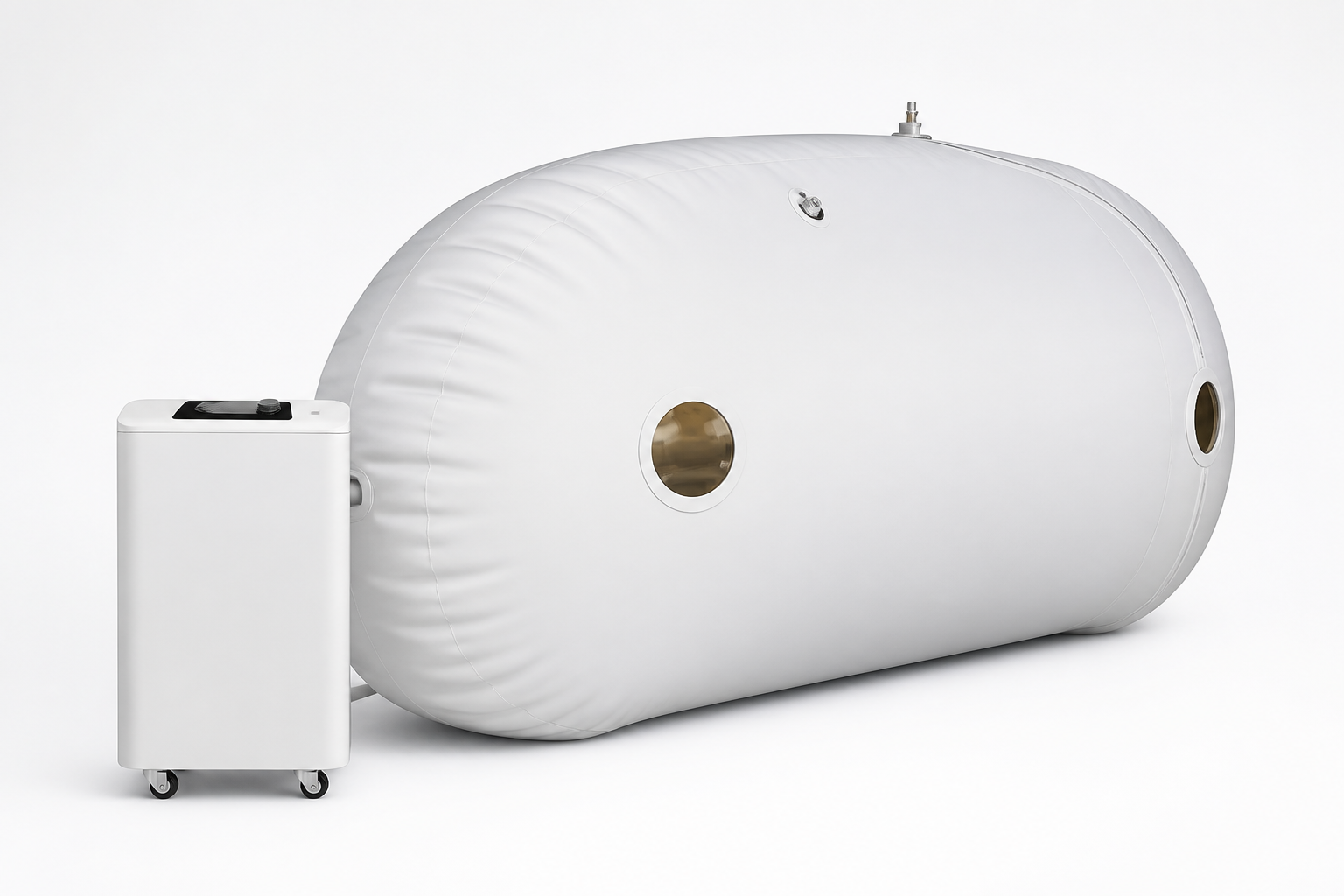
A hyperbaric oxygen chamber is a sealed, pressurized enclosure designed to expose the body to pressure above normal atmospheric pressure while the user breathes oxygen-enriched air or medical-grade oxygen, depending on the device and treatment setting. This guide explains how hyperbaric chambers work, the main chamber types, typical costs, potential uses, and important safety considerations.
Key Takeaways
- Mild home chambers commonly operate at approximately 1.3–1.5 ATA, while clinical HBOT usually uses higher pressures under medical supervision.
- The two broad chamber categories are soft-shell chambers and rigid hard-shell chambers.
- A mild home chamber is not equivalent to hospital-based hyperbaric oxygen therapy and should not be presented as a substitute for medical treatment.
- Device specifications, local regulations, oxygen source, training, maintenance, and supervision should all be reviewed before use.
What Is a Hyperbaric Oxygen Chamber?
At its simplest, a hyperbaric oxygen chamber is a container built to maintain pressure above 1.0 ATA. A person sits or lies inside while the chamber is gradually pressurized. The increased pressure can raise the amount of oxygen dissolved in blood plasma when oxygen is administered, although the delivered oxygen concentration and resulting physiological effect depend on the chamber, oxygen system, pressure, and protocol.
Clinical HBOT vs Mild Home Chambers
Clinical hyperbaric oxygen therapy is performed in appropriately designed hard-sided chambers using physician-prescribed medical-grade oxygen and trained supervision. Mild home chambers generally operate at lower pressures, often around 1.3–1.5 ATA, and may use an external compressor together with a home oxygen concentrator. The regulatory status and permitted use of a device vary by country, so buyers should confirm the rules that apply in their region.
How Does a Hyperbaric Oxygen Chamber Work?
At normal atmospheric pressure, most oxygen in the blood is carried by hemoglobin. Increasing ambient pressure while breathing oxygen increases oxygen partial pressure and can increase the amount of oxygen dissolved in plasma. In clinical settings, the treatment pressure, oxygen dose, session duration, and number of sessions are selected for a specific indication by qualified medical professionals.
Understanding ATA (Atmospheres Absolute)
ATA means atmospheres absolute. Sea-level atmospheric pressure is approximately 1.0 ATA. A chamber operating at 1.3 ATA produces less pressure than one operating at 1.5 or 2.0 ATA. A higher pressure is not automatically better; pressure and oxygen exposure must be appropriate for the device, setting, and intended protocol.
Session Length and Oxygen Source
Session length varies by device and protocol. Mild chamber sessions are often advertised in the 60–90 minute range, but users should follow the device instructions and obtain professional guidance rather than selecting a protocol independently. Home systems may use an oxygen concentrator instead of stored oxygen tanks. See our guide to using a chamber at home for an overview of setup considerations.
Soft-Shell vs Hard-Shell Hyperbaric Chambers
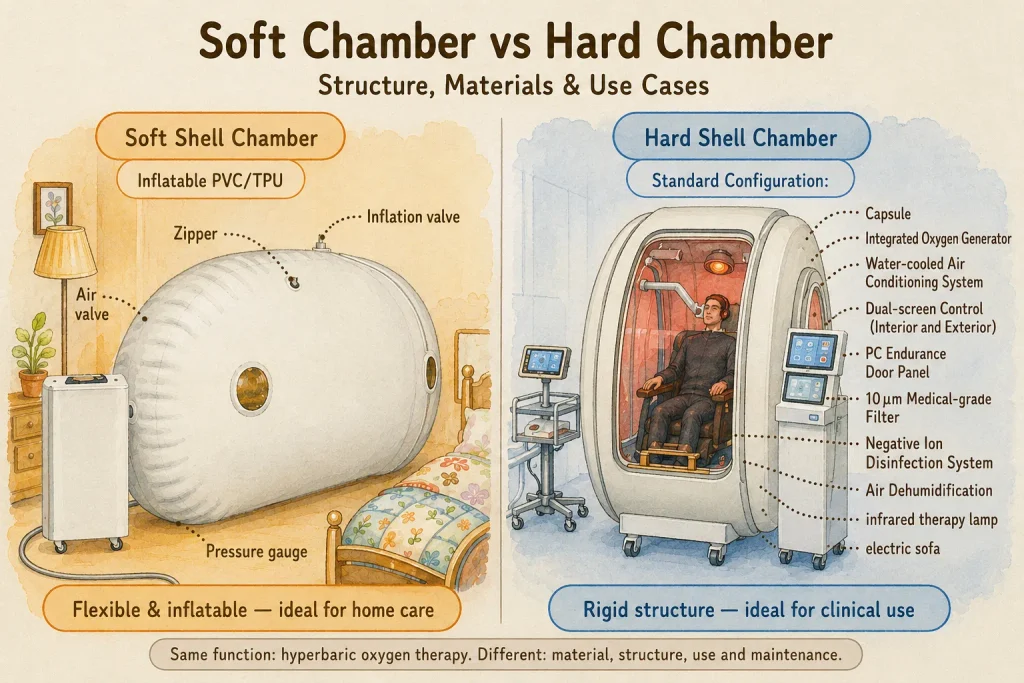
Soft-shell and hard-shell chambers differ in their construction, pressure capability, installation requirements, and intended setting.
- Soft-shell chambers: Flexible, comparatively portable, and generally limited to lower operating pressures.
- Hard-shell chambers: Rigid construction, heavier and less portable, with pressure capability depending on the specific design and certification.
- Monoplace and multiplace: A monoplace chamber accommodates one person; a multiplace chamber accommodates two or more people.
- Upright and horizontal: Upright models provide seating, while horizontal chambers are designed for the user to lie down.
| Feature | Soft-Shell | Hard-Shell |
|---|---|---|
| Construction | Flexible TPU/PVC or similar material | Rigid acrylic, steel, or other engineered structure |
| Typical pressure range | Often about 1.3–1.5 ATA | Varies by model; some systems operate at higher pressures |
| Portability | Higher | Lower |
| Installation | External compressor and compatible oxygen system | Dedicated installation and supporting systems |
| Typical setting | Home or wellness setting, subject to local rules | Home, commercial, or clinical setting depending on certification |
What Are Hyperbaric Oxygen Chambers Used For?
Hyperbaric chambers are used in different settings, but clinical HBOT and mild wellness chamber use should be clearly distinguished. Recognized clinical indications include conditions such as decompression sickness, carbon monoxide poisoning, gas embolism, selected difficult wounds, delayed radiation injury, and certain serious infections. These treatments require medical assessment and professional supervision.
Mild chambers are also marketed for general wellness, exercise recovery, sleep, skin health, and healthy-aging routines. Evidence and regulatory authorization for these uses vary, so they should not be described as proven treatments for disease. People who are pregnant or who have lung, ear, sinus, seizure, cardiovascular, or other relevant medical conditions should consult a qualified healthcare professional before use.
How Much Does a Hyperbaric Oxygen Chamber Cost?
Prices vary considerably by chamber type, pressure rating, size, certification, oxygen system, shipping, installation, training, and after-sales support. Soft-shell systems are generally less expensive than rigid hard-shell systems. When comparing quotations, ask whether the compressor, oxygen concentrator, cooling system, installation, warranty, replacement parts, and international shipping are included.
Are Hyperbaric Oxygen Chambers Safe?
Hyperbaric chamber use has real risks. Possible problems include ear or sinus barotrauma, temporary vision changes, oxygen-related effects, claustrophobia, and—in oxygen-enriched environments—fire. An untreated pneumothorax is a major contraindication. Users should follow the manufacturer’s instructions, observe prohibited-item rules, keep ignition sources and incompatible electronics out of the chamber, complete recommended training, maintain the equipment, and ensure appropriate monitoring and emergency procedures.
For current safety information, review the FDA’s hyperbaric device safety recommendations.
Certifications and Regulatory Status
Do not rely on a certification logo alone. Request the actual certificate, model number, scope, issuing body, test standard, and validity date. In the United States, FDA clearance applies to specific devices and intended uses; it should not be described as general “FDA approval” of every chamber or wellness claim. Requirements in the EU, UK, Middle East, Australia, and other markets differ. Confirm local device classification, prescription requirements, electrical standards, pressure-vessel requirements, and permitted marketing claims before purchasing or operating a system.
Choosing the Right Chamber
Compare the chamber’s intended use, operating pressure, size, entry method, internal space, oxygen delivery system, compressor noise, cooling, monitoring, emergency release, installation requirements, training, warranty, and local service support. Our lineup includes the M3 Single Cabin, M6 Double Cabin, and Luxury Time Machine. You can also review the M3 vs M6 comparison or contact us for model specifications and regional requirements.
Frequently Asked Questions
What is a hyperbaric oxygen chamber used for?
Clinical hyperbaric chambers are used under medical supervision for recognized indications such as decompression sickness, carbon monoxide poisoning, gas embolism, selected difficult wounds, and certain infections. Mild chambers are also marketed for wellness uses, but these should not be presented as equivalent to clinical HBOT or as proven treatments for disease.
How does a hyperbaric oxygen chamber work?
The chamber raises ambient pressure above normal atmospheric pressure. When oxygen is administered, the increased oxygen partial pressure can increase the amount of oxygen dissolved in blood plasma. The delivered dose depends on pressure, oxygen concentration, session duration, and protocol.
What is the difference between a soft-shell and hard-shell chamber?
A soft-shell chamber uses flexible materials and usually operates at lower pressures (commonly around 1.3–1.5 ATA). A hard-shell chamber has a rigid structure and may support higher operating pressures, depending on its design and certification. Soft-shell chambers are typically used in home or wellness settings, while hard-shell chambers may be used in home, commercial, or clinical settings.
Is a home hyperbaric chamber safe?
No pressure chamber is risk-free. Safe operation depends on the device, training, maintenance, supervision, contraindication screening, oxygen and fire-safety controls, and adherence to the manufacturer’s instructions. Users should keep ignition sources and incompatible electronics out of the chamber and ensure appropriate monitoring and emergency procedures.
Do I need a prescription for a home hyperbaric chamber?
Prescription and operating requirements depend on the country, device classification, intended use, and pressure capability. Confirm the applicable rules with the manufacturer, local regulator, and a qualified healthcare professional before purchasing or operating a system.
How long is a typical session?
Session length varies by device and intended protocol. Mild chamber sessions are often marketed in the 60–90 minute range, while clinical HBOT protocols are selected by medical professionals based on the indication.
Sources and Further Reading
- Undersea & Hyperbaric Medical Society: Indications and scientific definition of HBOT
- U.S. FDA: Safe use of hyperbaric oxygen therapy devices
Medical disclaimer: This article provides general educational and product-selection information. It is not medical advice, diagnosis, or a treatment recommendation. Consult a qualified healthcare professional before using a hyperbaric chamber, particularly if you have an existing medical condition.
HellowPlease log in