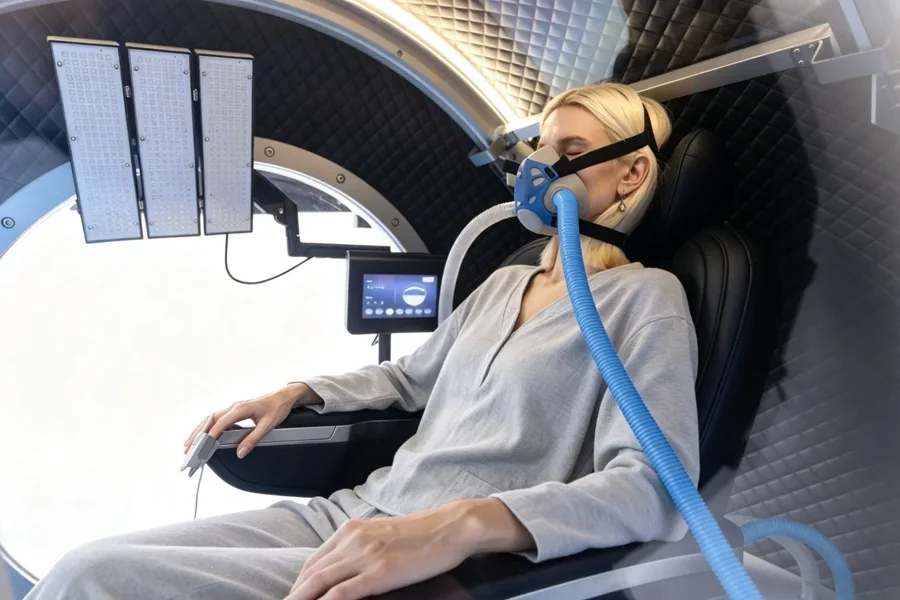
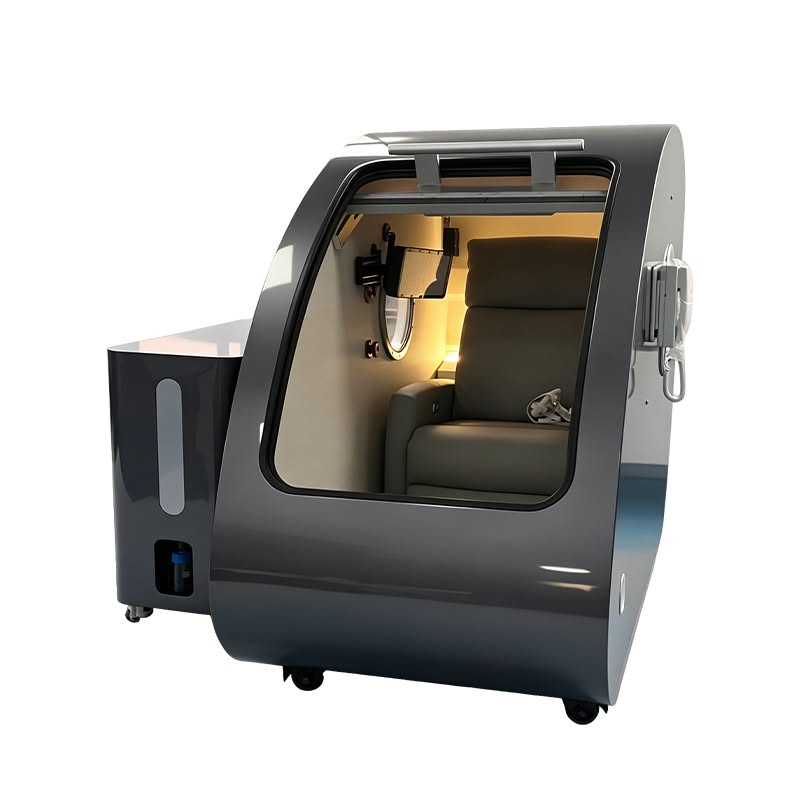
Adding a hyperbaric chamber for your wellness center requires more than choosing a model and placing an order. You need to confirm that your facility can accommodate the chamber equipment, that the delivery route is accessible, and that your staff can operate it according to the manufacturer’s instructions.
Preparing these details before purchasing helps you identify potential site limitations early. It also gives you a clearer basis for comparing chamber models and discussing technical requirements with manufacturers.
This guide covers the main checks to complete before ordering a hyperbaric chamber for your wellness center, from room measurements to daily operating procedures.
1. Assess Your Available Space Before Choosing a Chamber
Before choosing a hyperbaric chamber for wellness center, measure the room where you plan to place it. The chamber’s external dimensions are only the starting point. You also need to consider the space required for access, operation, maintenance, and movement around the equipment.
Check the room’s length, width, and ceiling height against the manufacturer’s specifications. Confirm whether the chamber door can open fully and whether staff can reach the controls, connections, and serviceable components without moving other equipment.
Floor loading is another important consideration. Ask the manufacturer for the chamber’s weight and the applicable support requirements. If the equipment is heavy or the building has specific structural limitations, consult a qualified building professional before installation.
You should also consider how the chamber will fit into your existing service layout. Keep customer circulation routes clear and avoid blocking exits, access panels, or other essential equipment.
Do not rely on a room’s total floor area alone to determine suitability. Two rooms with the same area may have different door positions, layouts, and usable space.
Before finalizing your purchase, share the room dimensions and a basic floor plan with your supplier. This allows you to check the proposed location against the requirements of the specific chamber model.
2. Check the Delivery Route Before Ordering
A room may have enough space for a hyperbaric chamber but still be difficult to access during delivery. Checking the complete transport route before placing your order can help you avoid unexpected handling costs or delays.
Start at the building’s unloading point and follow the route to the intended room. Measure entrance doors, corridors, turns, stairways, and elevator openings where applicable. Also check ceiling clearance and any narrow sections that could restrict movement.
Ask your manufacturer for the shipping dimensions and weight of the packaged equipment. These may differ from the dimensions of the assembled chamber. You should also confirm whether the chamber arrives fully assembled or requires some work on site.
If your facility is located on an upper floor, verify the elevator’s internal dimensions, weight limit, and access arrangements. Where an elevator is unavailable or unsuitable, discuss alternative handling methods with your delivery provider.
Do not assume that standard freight delivery includes moving the chamber into its final room. Confirm who is responsible for unloading, internal transportation, positioning, and any required assembly.
If possible, provide your supplier with photographs and measurements of the delivery route before ordering. You can then clarify potential access problems while there is still time to adjust the delivery plan or equipment selection.
3. Confirm Power Supply and Room Conditions
Before purchasing a hyperbaric chamber, compare its electrical requirements with the facilities available at your wellness center. Requirements vary by model and configuration, so use the manufacturer’s technical documentation rather than assuming that a standard wall outlet will be sufficient.
Check the specified voltage, frequency, power consumption, grounding requirements, and electrical protection. If the chamber uses separate oxygen concentrators, compressors, cooling equipment, or other accessories, account for their electrical requirements as well.
A qualified electrician should assess whether the existing circuit can support the intended equipment. Avoid connecting multiple devices to an existing circuit without confirming its capacity and suitability.
Room conditions also deserve attention. Ask the manufacturer whether the equipment has specified limits for ambient temperature, humidity, ventilation, or operating environment. Consider heat output and noise from auxiliary equipment, particularly if the chamber will operate near consultation rooms or other wellness services.
Keep the equipment away from locations that could interfere with its operation or maintenance. Ensure that electrical connections and service access remain accessible after the chamber is positioned.
You should also confirm which site preparations are the facility owner’s responsibility and which are covered by the supplier.
Before finalizing the room layout, obtain the technical requirements for the exact chamber model you intend to purchase. This gives your electrician and facility contractor clear specifications to work from.
4. Plan Safety Measures and Local Compliance
Safety requirements should be reviewed before you introduce a hyperbaric chamber into your wellness center. The measures you need depend on the equipment, its intended use, the manufacturer’s instructions, and the regulations applicable in your country or region.
First, establish whether the chamber will be used for non-medical wellness services or within a regulated medical service. Do not assume that equipment marketed for wellness use is automatically exempt from local medical-device, facility, or operating requirements. Check the applicable rules before purchasing.
Review the manufacturer’s instructions for safe operation, prohibited materials, cleaning, maintenance, and emergency procedures. Oxygen-enriched environments require particular attention to fire prevention. Staff should understand the applicable restrictions on ignition sources, clothing, personal products, and other potential fire hazards specified by the manufacturer.
Your facility should also establish clear procedures for equipment checks, incident reporting, and responding to abnormal operating conditions. Any required fire-safety measures, inspections, permits, and emergency arrangements should be confirmed with the relevant local authorities or qualified professionals.
Staff training is part of this preparation. Employees should understand the operating procedures and know when to stop using the equipment and contact authorized technical support.
Avoid relying solely on a supplier’s general safety claims or certificates. Verify that the documentation applies to the specific model and intended market.
Completing these checks before ordering helps you identify regulatory or facility requirements that could affect your purchasing decision.
5. Prepare Your Staff and Daily Operating Workflow
A hyperbaric chamber needs a defined operating process, not just a suitable room. Before introducing the equipment, decide who will be responsible for operating it, checking its condition, maintaining records, and coordinating technical support.
Start by reviewing the manufacturer’s operating instructions and training requirements. Assign responsibilities clearly so that staff members know which tasks they are authorized and trained to perform. Where local regulations require specific qualifications or supervision, ensure that your staffing arrangements meet those requirements.
Next, establish a routine for preparing the chamber before use and checking it afterward. Follow the manufacturer’s instructions for equipment inspections, cleaning, and maintenance. Define how staff should record completed checks and report faults or unusual operating conditions.
You should also plan how the equipment fits into your appointment schedule. Allow sufficient time for the preparation and cleaning procedures required by the manufacturer rather than scheduling sessions back-to-back without considering operational needs.
Create a clear process for taking the chamber out of service if a problem occurs. Staff should know whom to contact, what information to record, and when the equipment must remain unavailable until an authorized person has assessed it.
If you already operate several wellness services, assign responsibility for coordinating the chamber with your existing team and facility procedures.
Preparing these workflows before the equipment arrives gives your staff time to review the instructions, organize responsibilities, and identify practical issues before the first customer appointment.
6. Request the Right Information from Your Manufacturer
Your manufacturer should provide enough technical information for you to assess the equipment and prepare your facility before placing an order. A product brochure is useful for initial comparison, but it may not contain every detail your contractor or operating team needs.
Request the technical specifications for the exact model and configuration under consideration. These should include external dimensions, weight, electrical requirements, operating parameters, and the requirements for any included accessories.
You should also ask for the applicable operating manual, safety instructions, maintenance guidance, and relevant inspection or test documentation. If you plan to import the chamber, confirm which certificates and supporting documents are available for your destination market. The existence of a certificate alone does not establish that every local requirement has been met.
Delivery arrangements deserve equal attention. Clarify the shipping method, packaged dimensions, unloading responsibilities, delivery terms, and whether any on-site assembly or commissioning is included.
Before committing to a supplier, review the warranty terms, spare-parts availability, technical support arrangements, and procedures for reporting equipment problems. Confirm what is covered, how support is provided, and whether any work must be performed by authorized personnel.
You can also send the manufacturer your room measurements, floor plan, electrical details, and delivery-route photographs. This information helps the supplier identify questions that need to be resolved before production or shipment.
Clear documentation and agreed responsibilities reduce uncertainty during purchasing and help your team prepare for the equipment’s arrival.
7. Complete a Pre-Purchase Readiness Checklist
Before placing your order, review the practical requirements for your facility. A checklist helps you identify missing information and prevents important decisions from being left until delivery.
Confirm the intended use and exact chamber model.
Measure the room and check access, operating, and maintenance space.
Verify floor-loading requirements where applicable.
Measure the full delivery route, including doors, corridors, turns, and elevators.
Confirm packaged dimensions, delivery arrangements, and unloading responsibilities.
Check electrical supply and the requirements of all included accessories.
Confirm applicable room conditions and ventilation requirements.
Review local regulatory, fire-safety, and facility requirements.
Identify staff responsibilities and training needs.
Obtain the relevant technical documents, operating instructions, and maintenance guidance.
Review warranty coverage, spare-parts arrangements, and technical support.
Clarify whether installation, assembly, or commissioning services are included.
You do not need to complete every building modification before selecting a chamber. However, you should resolve the requirements that could affect model selection, site suitability, or delivery before committing to the purchase.
If an item remains uncertain, document the issue and assign responsibility for confirming it. For example, your electrician can verify circuit capacity, while your supplier can confirm equipment dimensions and technical requirements.
A completed checklist gives you a more reliable basis for comparing suppliers and planning the next steps. It also helps your team identify which decisions must be finalized before the equipment is shipped.
Conclusion: Prepare Your Facility Before You Place Your Order
Preparing your wellness center for a hyperbaric chamber starts with confirming that the equipment fits your facility, can reach its intended location, and meets the site’s technical and operational requirements.
Room measurements, delivery access, electrical capacity, safety procedures, staff training, and supplier documentation should all be reviewed before you commit to a purchase. The exact requirements depend on the chamber model and your local regulations, so avoid relying on generic dimensions or assumptions.
If you are considering a MIND Luxury Space or Luxury Time chamber, share your intended use, room dimensions, delivery conditions, and destination country with our team. MIND can help you review the relevant product specifications and clarify equipment configuration, documentation, delivery arrangements, warranty, and spare-parts support before you place your order.
Discover how hyperbaric oxygen therapy improves athletic performance, speeds muscle recovery & reduces sports fatigue. Learn benefits of home HBOT chambers for athletes from MIND.
If you are considering a home hyperbaric chamber, the first step is not to choose the lowest-priced model or the chamber with the highest pressure. You need to understand which chamber type fits your intended use, available space, operating requir...
When you compare hyperbaric chamber quotes from hyperbaric chamber manufacturer, the lowest price does not always represent the best value. Two suppliers may quote similar looking chambers but offer different materials, oxygen concentrator configu...
As hyperbaric oxygen chambers become more and more common in daily life, more and more people are paying attention to them. Hyperbaric oxygen chambers can also be classified in different ways. Let's take a look at them together! What are the types...
 MindOXYChamber